
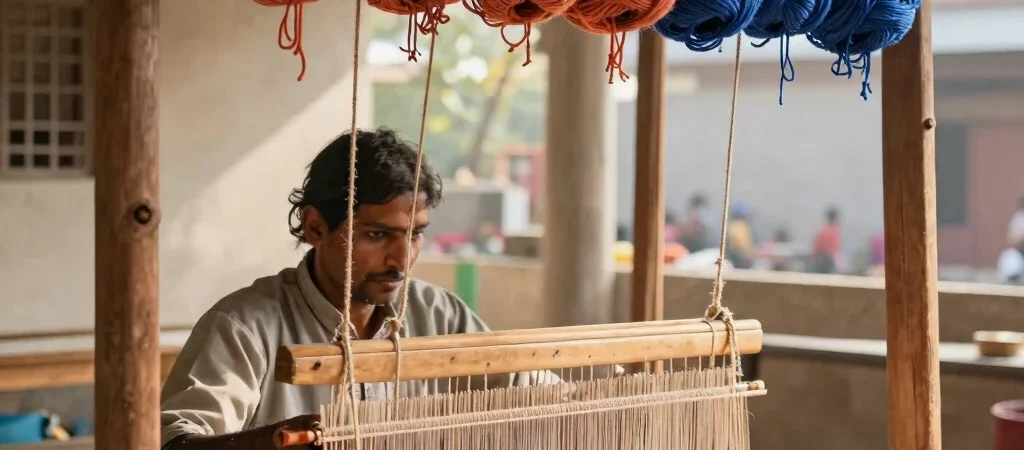
The adjacent districts of Bhadohi and Mirzapur in eastern Uttar Pradesh represent one of the dense textile manufacturing corridors in South Asia. Situated along the alluvial plains of the Ganges, this region has sustained generations of specialized weavers, dyers, and finishers. The area functions not as a single monolithic factory base, but as a vast decentralized network where village homes host vertical pit looms under thatched eaves.
The Foundations of the Craft Belt
Centuries of artisan migration and royal patronage anchored the weaving discipline in this fertile agricultural belt. The proximity to soft river water made the region ideal for scouring raw fleece and washing finished carpets to set their vegetable and chrome mordants. Over decades, whole hamlets developed reputations for distinct phases of the production cycle, from carding and bobbin winding to intricate pattern mapping via traditional design charts.
The Division of Regional Labor
A genuine hand-knotted carpet from this region moves through many hands before it is rolled for shipment. Master weavers work alongside apprentices to pass heavy iron beating combs across newly laid rows, locking the weft firmly into place. Once cut from the beams, carpets travel to communal washing yards, flat drying fields, and finishing sheds where shears level the pile by hand with millimeter precision.
Sustaining Craft Integrity in Modern Trade
Today, Mirzapur and Bhadohi balance global export demand with the preservation of artisanal autonomy. While tufted floorcoverings supply fast-moving commercial markets, the core prestige of the belt rests on slow, knotted carpets. Supporting this infrastructure requires honoring the time investment of the artisan and maintaining transparent sourcing of raw, unadulterated natural fibers.