
Industry & Heritage
Generational craft meets worldwide supply
Carpet weaving in India carries lineages of skilled hands, while global markets depend on fiber sourcing, fair labor, and transparent trade. This section follows both threads through the regional workshops that shape them.
Indian Carpet Heritage
Mirzapur and Bhadohi at the center of weaving
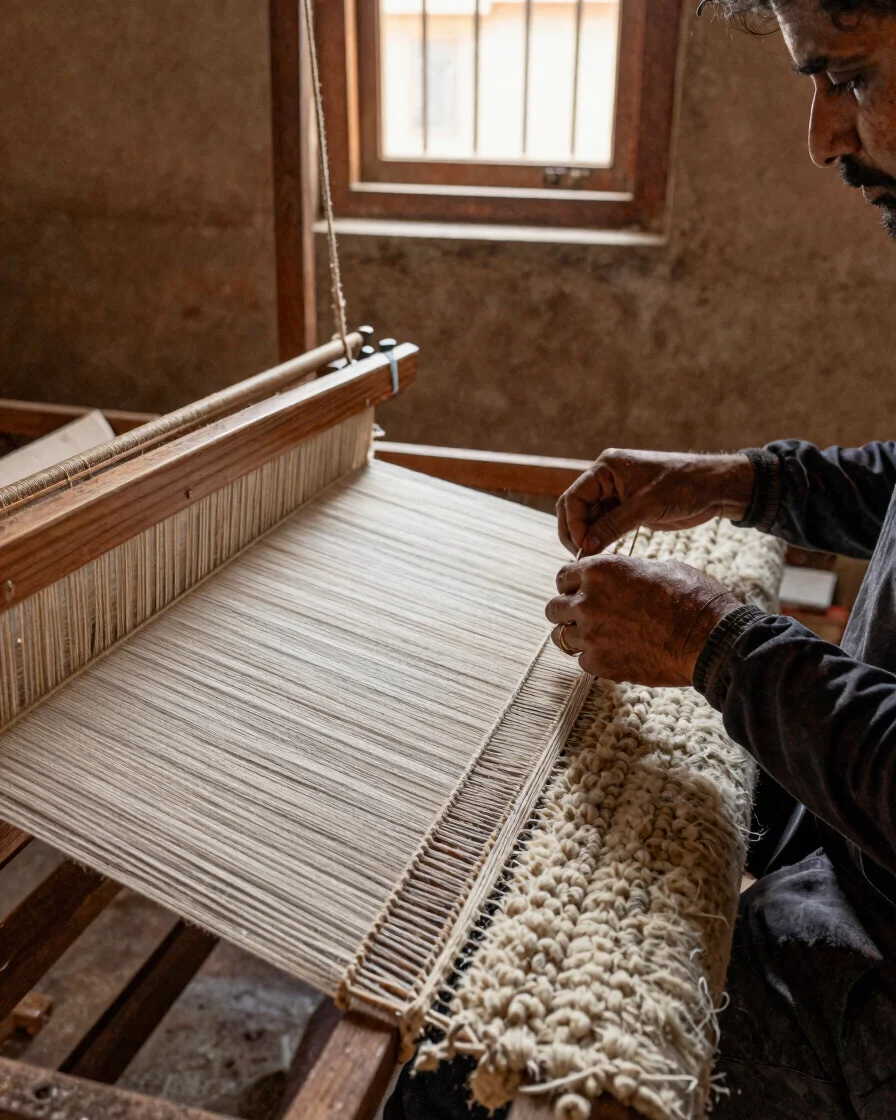
Mirzapur and Bhadohi form the historic center of Indian carpet weaving. Their workshops sustain master craftsmen whose knowledge of knots, pile, and loom technique passes from one generation to the next.
Studying these lineages reveals how regional materials, local markets, and family workshops together shape the character of the finished rug.
Global Carpet Industry
Trade, sustainability, and the business of carpets
International trade relies on transparent supply chains, fair labor agreements, and regional geographical indications. Sustainable practice asks for closed-loop wool washing, non-toxic plant pigments, and biodegradable latex adhesives.
Global Carpet Industry
Transparent supply chains
Tracing fiber, dye, and weaving steps helps buyers and researchers understand where a carpet was made and under what conditions.
Sustainability
Eco-friendly carpet practice
Closed-loop wool washing, non-toxic plant pigments, and biodegradable latex adhesives mark the direction of responsible production.
Carpet Business and Trade
Geographical indications
Regional names and fair labor agreements help identify authentic origin and protect the communities that carry the craft.