
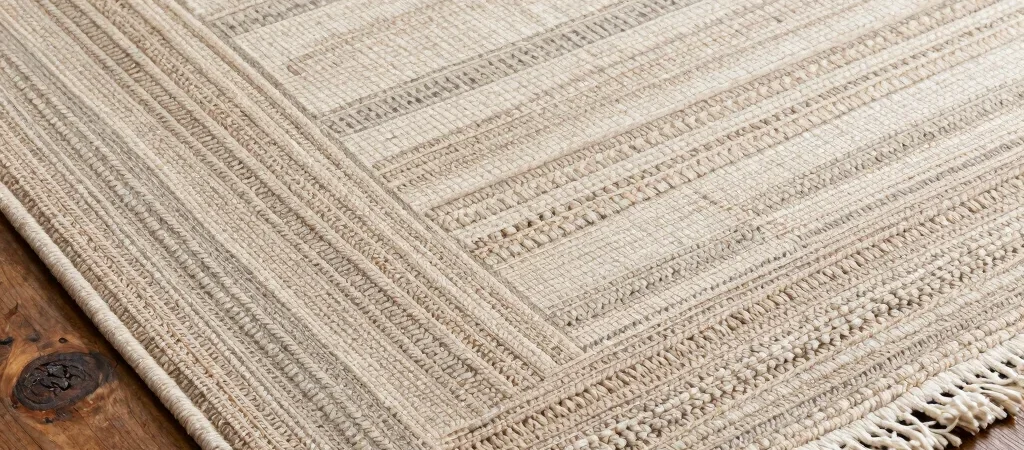
Knot count is frequently presented as the single metric for judging a hand-knotted rug. While knots per square inch accurately measures the graphic resolution of a pattern, it tells only a fraction of the story regarding how a textile endures underfoot. Structural longevity depends far more on the cohesion of the foundation, the staple length of the spun wool, and the calibrated tension applied across warp and weft during months on the loom.
What Knot Count Actually Communicates
A higher knot density allows an artisan to execute tight curves, intricate floral palmettes, and delicate medallions with crisp line definition. In carpets woven with fine, worsted wool or silk, knot counts can surpass several hundred knots per square inch. Conversely, geometric tribal carpets or village flatweaves may feature modest knot counts while providing exceptional structural integrity thanks to thick, lanolin-rich yarns that lock tightly into one another.
Fiber Character Versus Numerical Density
A carpet woven with short-staple, chemically stripped wool will deteriorate regardless of how densely it was knotted. High-grade highland wool retains natural lanolin and features long, undulating fibers that naturally spring back after compression. When handspun, this yarn maintains irregular pockets of air and varied twist that absorb friction, while rigid, machine-spun yarns packed at high density can grind against foundation threads when subjected to gritty dust.
Assessing the Foundation on the Reverse
To gauge structural health, turn the carpet face down and examine the reverse weave. Look for uniform rows where the weft shoots sit snugly between knots without irregular gaps or buckled ridges. A well-constructed carpet lies completely flat without curling corners, confirming that the weaver maintained balanced warp tension from the initial kilim hem to the finishing fringe.